Most healthcare capital categories are growing at low single digits right now. Mobile clinics are not.
Independent market analysts differ on the exact numbers — they always do — but they converge on a range that’s unusual for healthcare infrastructure. Precedence Research puts the global mobile clinics market at $6.54 billion in 2026, rising to approximately $17.29 billion by 2035, a CAGR of 11.43%. Fortune Business Insights projects growth from $5.16 billion in 2026 to $10.31 billion by 2034 at a 9.0% CAGR, with North America holding the dominant regional share. The Insight Partners estimates a 9.45% CAGR from 2026 to 2034.
Call it high single digits to low double digits, sustained for a decade. For comparison, that’s a faster clip than most hospital construction, most durable medical equipment categories, and most of the traditional outpatient buildout.
The more useful question isn’t what the CAGR is. It’s why the money is moving this direction — because those reasons are the same ones you’ll need to articulate to your own board.
Deployment, not just dollars
Market sizing is abstract. Deployment numbers are not. Mobile Health Map data reported by the National Association of Rural Health Clinics counts more than 3,600 mobile units operating in 2025, 65% of them serving rural communities, delivering 10 million visits annually and saving an estimated 55,000 emergency department visits per year — with the sector growing 80% since 2013.
That’s a real installed base doing real volume, not a projection. And the growth curve there — 80% over roughly a decade — tracks closely with what the forecasters expect for the next one.
Five forces behind the growth
1. The build-versus-reach calculation flipped
A permanent clinic site commits you to a specific address, a lease or mortgage, a fixed staffing model, and a demand forecast you have to be right about for twenty years. The costs are enormous and the flexibility is zero.
A mobile unit reaches multiple communities from one asset. If a site underperforms, you change the route rather than absorb a write-off. For systems that have already saturated the sites that can support a fixed clinic, mobile is often the only remaining growth path that pencils — a dynamic we covered in how mobile clinics complement brick-and-mortar facilities.
2. Value-based contracts changed what “revenue” means
Under fee-for-service, an unscreened patient is simply a patient who hasn’t generated a claim yet. Under capitated and risk-bearing arrangements, that same patient is an uncontrolled liability.
That inversion is what turned outreach from a community-benefit line item into an operating strategy. Every screening that catches a condition early, every managed chronic case that doesn’t become an admission, every ED visit diverted to a scheduled encounter — those are margin under a risk contract. Mobile clinics are among the most direct tools for reaching the exact patients who drive that math.
3. Payer mix pressure is pushing care upstream
With Medicaid enrollment contracting and uncompensated care rising, health systems are facing more patients who will show up eventually, in the most expensive setting, with the most advanced disease. Preventing that is no longer a philosophical position — it’s a cost-containment necessity. Mobile wellness and outreach programs are among the few interventions that reliably reach people before the crisis.
4. Federal and state money is pointed here
The $50 billion Rural Health Transformation Program began distributing to states in 2026, and state plans named EMS and mobile care innovation alongside primary care access, technology modernization, and behavioral health. That’s a multi-year funding stream that explicitly contemplates mobile and flexible care delivery, arriving right as demand is rising.
5. What fits in a unit keeps expanding
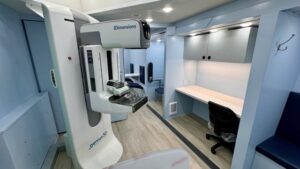
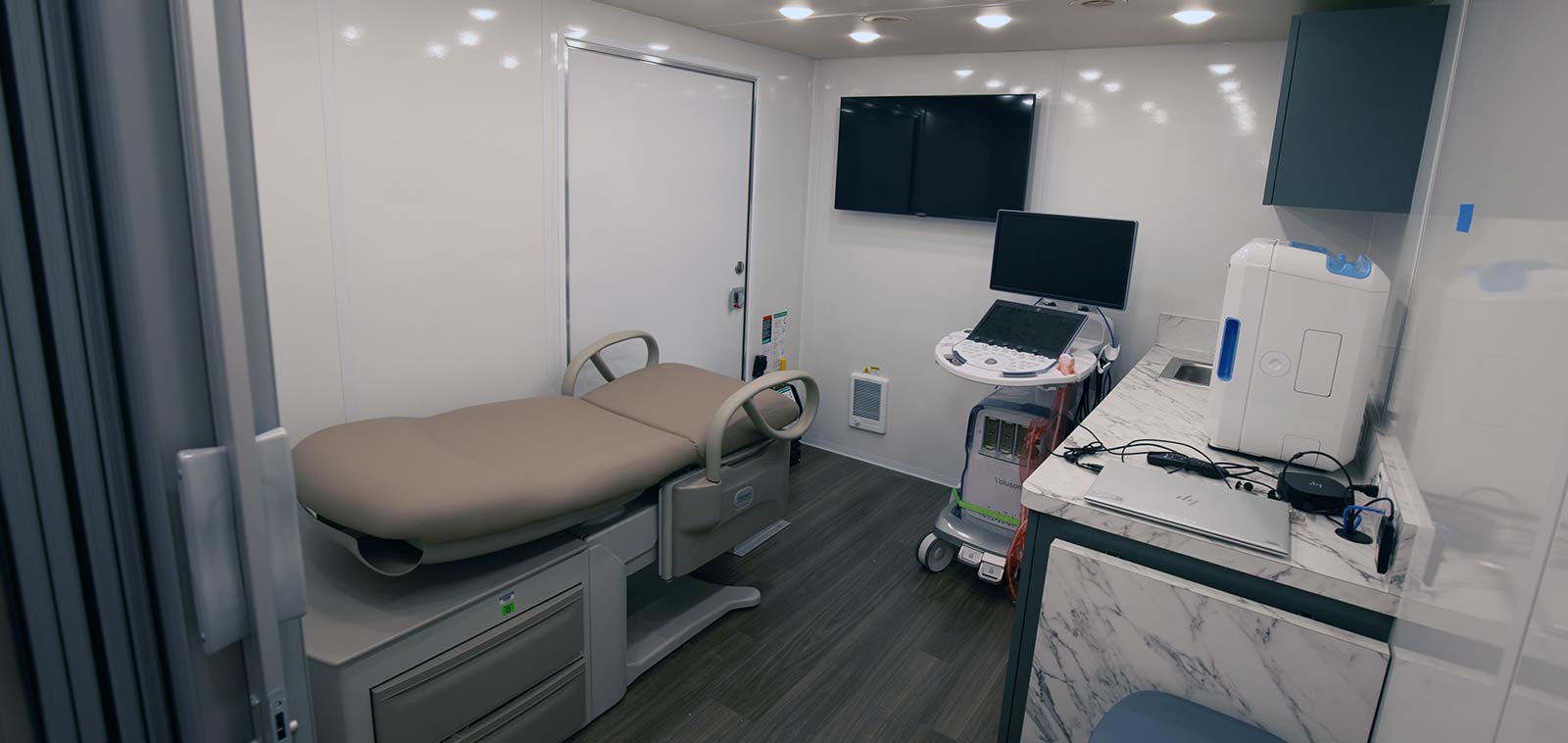
The technical ceiling has moved. Early mobile clinics did blood pressure checks and vaccinations. Current units support advanced imaging, dental operatories, behavioral health suites, mammography, dialysis, and — in the relocatable category — MRI, PET, and linear accelerators. Analysts cite emergency response and disaster relief, increasing adoption of telehealth, and growing demand for preventive care as primary drivers.
As capability expands, so does the set of service lines that can justify a unit. That compounding is a large part of why the growth rate stays elevated rather than plateauing.
Building the internal case
If you’re the person who has to justify this to a finance committee, a few things tend to land better than the market data:
Lead with cost avoidance. ED diversions, avoided admissions, and earlier-stage detection translate directly into dollars your CFO already tracks. The market CAGR is context; the avoided-cost model is the argument.
Model utilization honestly across the service area. The mistake is evaluating a mobile unit like a fixed site — asking whether any single stop supports it. The right question is whether the aggregate volume across the route does. That’s a much more favorable analysis and it’s the one that reflects how the asset actually works.
Name the strategic risk of waiting. Mobile programs build community relationships that are hard to displace once established. In markets where a competing system deploys first, the referral relationships tend to follow them. That’s a real cost of a two-year delay, and it belongs in the memo.
Price the flexibility. A unit that can serve primary care this year and screening next year has an option value a fixed building doesn’t. Finance committees understand optionality when you name it.
Get the timeline into the proposal. Build lead times are meaningful, and a proposal with a specific in-service date is far more actionable than one that ends at “we should explore this.”
A word on the numbers
Be careful with mobile clinic market statistics circulating online. Several widely-quoted figures — including some eye-catching CAGRs above 30% and a frequently-repeated claim that 62% of rural and underserved areas depend on mobile clinics — trace back to low-quality aggregator reports whose methodology isn’t disclosed and whose figures don’t reconcile with any other source.
If you’re citing numbers in a board memo, the defensible ones are the Mobile Health Map deployment data, which counts actual operating units, and the mainstream analyst forecasts in the 9–11.5% CAGR range. A number that gets challenged in the room does more damage than no number at all.
The bottom line
Growth this consistent across independent forecasts usually means the underlying demand is structural rather than cyclical. Aging demographics, provider shortages in rural counties, risk-based payment, and constrained construction capacity aren’t going to reverse in the next few years.
Organizations deciding now aren’t deciding whether mobile care is viable. They’re deciding whether they’d rather be early in their market or late.
Frequently Asked Questions
How fast is the mobile clinic market growing?
Independent forecasts cluster between roughly 9% and 11.5% compound annual growth through the early-to-mid 2030s. Precedence Research projects an 11.43% CAGR to 2035, Fortune Business Insights 9.0% to 2034, and The Insight Partners 9.45% to 2034. Estimates of total market size differ based on what each analyst counts, but the growth range is consistent across sources.
How many mobile clinics are operating in the United States?
Mobile Health Map counted more than 3,600 mobile units in 2025, roughly 65% of them serving rural communities. Collectively they deliver about 10 million visits per year and are estimated to prevent around 55,000 emergency department visits annually. The sector has grown roughly 80% since 2013.
What’s driving mobile clinic growth right now?
Five overlapping forces: fixed clinic construction is expensive and inflexible; value-based contracts make unscreened patients a financial liability rather than a neutral; Medicaid contraction is pushing systems toward upstream intervention; new federal rural health funding explicitly names mobile care; and the range of services that fit in a unit keeps expanding, from dental and behavioral health to advanced imaging.
How do I justify a mobile clinic to a finance committee?
Lead with cost avoidance rather than market data — ED visits diverted, admissions avoided, and earlier-stage detection are metrics your CFO already tracks. Model utilization across the whole route rather than asking whether any single stop supports the unit, since aggregate volume is how the asset actually works. Include a specific build timeline and in-service date so the proposal is actionable rather than exploratory.
Which mobile clinic statistics are actually reliable?
Deployment data from Mobile Health Map is the most defensible, because it counts real operating units rather than modeling a market. Among market forecasts, stick to the mainstream analysts in the 9–11.5% CAGR range. Be skeptical of figures claiming 30%+ growth rates or specific percentages of rural areas “depending on” mobile clinics — those generally trace to aggregator reports with undisclosed methodology.